Sunshine is delicious, rain is refreshing, wind braces us up, snow is exhilarating; there is really no such thing as bad weather, only different kinds of good weather. ~John Ruskin

Friday, February 12, 2021

United States Radium Corporation

    The U.S. Radium Corp. is a radiation site located in Orange, New Jersey. This site was used to operate a radium processing plant from 1917-1926. During its operation, waste generated from the plant was disposed of both on and off the property of the facility. This waste contaminated the site and local properties with radium-226. 

    Radium-226 is a highly radioactive isotope with a half-life of 1600 years. Radium-226 emits ionizing radiation and decays into radon gas. When directly exposed to people, the radioactive dust particles can be inhaled or ingested, causing adverse health effects with an increased chance for certain types of cancer. The United States Radium Corporation was used to extract and process radium from carnotite ore. 

    The extracted radium was then sold and used for medical purposes and luminous paint. This luminous paint was especially in high demand for dials, watches, and aircraft instruments painted with luminescence paint. During its operation, about a half-ton of carnotite ore was processed each day. In 1926, the U.S. Radium Corporation ceased its extraction and processing. 

    The United States Radium Corporation employed around 100 workers, and about 70 of them were women. While working on the smaller number dials on thee watches, the owners of the company told the women to use their mouths to point the brush. Though there somewhat was an understanding of radium’s dangers, these women still used their mouths to help themselves paint on the dials. Due to the high volumes of radiation being this close to their mouths, many of these women began to suffer from diseases, such as anemia, bone fractures, and necrosis of the jaw, (radium jaw). Today these women are known as the ‘Radium Dial Girls’


    When New Jersey officials came to the realization of the dangers this level of radiation may cause in the early 1980s, they took immediate actions to protect both human health and the environment. In September 1983, the EPA placed the site on the Superfund programs National Priorities List.  Following this, between 1989 and 1993, the EPA completed a broader remedial investigation and feasibility study, further assessing the level of contamination in the area. In 1991, the EPA took interim removal actions in an attempt to mitigate the radiation’s threat to human health and the environment.


Saturday, December 12, 2020

Satellites

    According to Nasa.gov, a satellite is a moon, planet or machine that orbits a planet or star. With this definition of a satellite, we can also consider the planets in our solar system, like the Earth, a satellite since it orbits the sun. These are known as “Natural Satellites.” More specifically, a "satellite" refers to a machine that is launched into space and revolves around Earth or another body in space. These machines are used by various different researchers to help better understand the universe.

    Some meteorologists use satellites to take pictures of the planet in order to predict weather and track hurricanes. Other meteorologists take pictures of other planets, the sun, black holes, dark matter, or faraway galaxies. Many other satellites are still used mainly for communications, such as beaming TV signals and phone calls around the world.

    Satellites are able to give researchers a bird's-eye view allowing them to see large areas of Earth at one time. This ability allows satellites to collect more data even quicker than instruments on the ground. Satellites are also very useful because they can provide much clearer images of outer space than telescopes. This is because they reside above the natural barriers like clouds and dust molecules that can block the view from the ground level.  Satellites are also used to make TV signals and phone calls possible. These devices are able to send their signals up to the satellite, which almost instantly sends them back down to different locations on Earth.

    Out of the 2,666 operational satellites circling the globe in April 2020, 1,007 were for communication services. 446 of these satellites are used for observing the Earth and 97 for navigation/ GPS purposes. Right now, there are nearly 6,000 satellites circling our tiny planet. About 60% of those are defunct satellites or space junk, and roughly 40% are operational.


Sunday, December 6, 2020

El Nino and La Nina

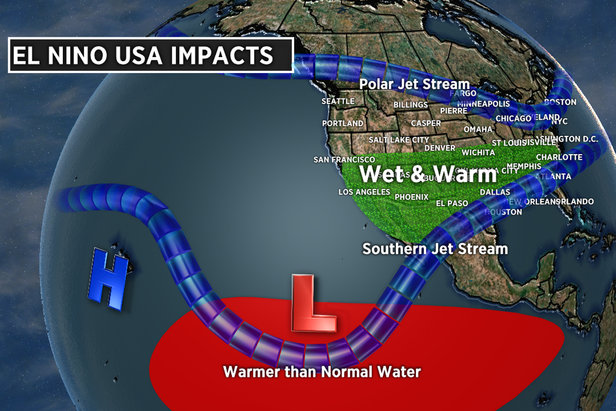
 La Nina and El Nino are both effects that occur because of the El Nino Southern Oscillation phenomena El Nino being a warm phase and La Nina is the cold phase with a neutral phase occurring occasionally in between. The El Nino Southern Oscillation also is known as ESNA is a pattern of trade winds in the Pacific Ocean that influence the weather across the world. The name El Nino (little boy) was fixated on this event when waters would be warmer than normal on the coast of South America and La Nina (little girl) was for when the waters would be colder than normal. During an El Nino, which occur every 3-5 years, there is is a warming of waters in the Pacfic Ocean that is paired with stronger winds that blow eastward. The effects that come with El Ninos include a drastic increase in rain levels in the southern United States, that often bring flash floods. Along with this there are often colder winters in the northeast due to a strong polar jet from the north. El Ninos also have a strong impact on hurricane formation and during an El Nino event there is an increase in hurricane production in the Pacfic Ocean and a decrease in the Atlantic Ocean due to the strong wind shear that often rips apart any tropical activity. 

During a La Nina the effects are the opposite of an El Nino, the waters in the Pacfic Ocean cool while and the wind slows down. During a La Nina the southern United States is met with extremely hot and dry weather, while the northern states often deal with above average precipitation during the winter months. Likewise with La Ninas there is an impact on hurricane production but differing to El Ninos, La Ninas produce more hurricanes in the Atlantic and less in the Pacific due to the water and wind changes. ESNO is referred to as one of the most important weather phenomena across the globe because of the heavy impact that it has on food and agriculture sources across the world. The cause behind this event includes oceanic circulation which involves the rising and sinking of warm and cold waters throughout the oceans on the planet. One particularly grim event involved an El Nino during the years 2015-16 in which over 60 million people were directly impacted due to the years El Nino, which caused widespread famine, drought, and disease outbreak. With the warming of our planet these El Ninos will continue to gain strength and impact more and more people across the world. 


Monday, November 30, 2020

Radiosondes & Rawinsondes

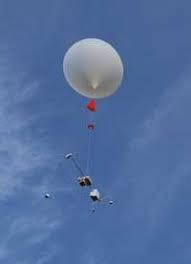
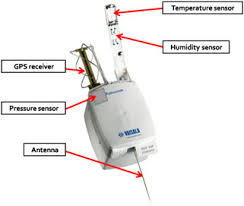
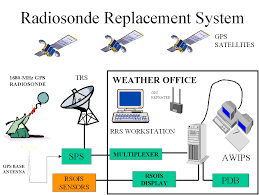
       Radiosondes are small, expendable instrument packages that are suspended below a large balloon inflated with hydrogen or helium gas known as the weather balloon. They transmit air pressure, temperature, relative humidity, and GPS position data each second they are used. They are also connected to a battery-powered, 300 milliwatt radio transmitter so they transfer their data much faster.

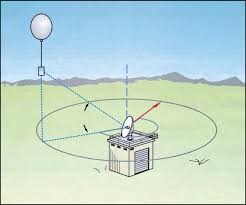
    Rawinsondes are observations where winds aloft and are obtained by radiosondes. They can be radiosondes or can be a result of radiosonde data but they work the same as radiosondes but are tracked by a radar or radio direction finder. It can project methods of upper-air observation consisting of an evaluation of wind speed and direction, temperature, pressure, and relative humidity.

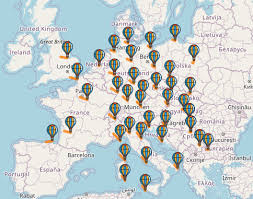
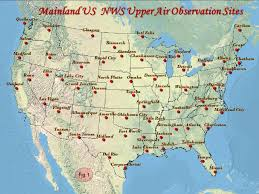
When the balloon reaches its maximum height, it explodes leading the device to fall a large height from the atmosphere. However, there is an orange parachute to prevent this device from breaking due to it having a possibility to harming the environment and to possibly use these devices again in the future. Most radiosondes however land in the oceans due to most of the stations being on the coasts.

Without radiosondes, we wouldn't be able to calculate weather data to create maps, graphs, and future conditions. Without these devices, we wouldn't even know if it would rain or if there could be snow. This has a very important purpose in today's technology.

Monday, November 16, 2020

The Doppler Radar

 The Doppler radar is a modern weather radar that is used to see more than just clouds. It was named after J. Christian Doppler, who first proposed the idea of the "Doppler effect" when he noticed that a train horn was louder when stationary next to him compared to when it was moving away. The radar sends low frequency radio waves (pulses) into stormy areas to determine the velocity, distance, and direction of the wind or precipitation. It can also measure if the storm is moving away or towards the radar. A picture of it is shown below, containing a large satellite dish covered by a sphere to protect it from the elements.

    This forecasting process begins with a low frequency radio wave, or pulse, that is shot into a storm at a certain elevation. Once the pulse hits a raindrop, piece of hail, or a gust of wind the pulse breaks apart and many different waves shoot out in different directions. Using the Doppler effect, one wave will reach back to the satellite dish with a different frequency than what it started with. The back and forth interaction will usually last about 0.00000157 seconds. The forecasters can then measure the intensity of the storm by using the new frequency of the returning waves. If the pulse return with a high frequency, they can assume that the storm is intense, while a low frequency indicates a less powerful storm. The pulse also helps to find the horizontal distance of the storm, which is helpful in forecasting the storm on a map. The Doppler radar is important because it not only finds the distance of a storm, but it also finds the intensity. This can help predict future weather events and how detrimental they will be to certain areas. This can help communities properly prepare for any upcoming storms; whether it is closing windows of the house or evacuating.

    An example of the Doppler radar is the WSR-88D. Currently, it is the most powerful radar worldwide, possessing the strength of 750,000 watts. For perspective, this wave transmitter is 10,000 times more powerful than a lightbulb (75 watts). As most Doppler radars can only see one storm at a time, this model can see past more than one storm, giving information on further weather. The National Weather Service (NWS) owns one of these machines that sees 14 elevations every 5 minutes, giving one pulse every 20 seconds. This intelligent radar gives quick and accurate depictions on the weather, and what is to come.    

  1. the Doppler effect: an increase (or decrease) in the frequency of sound, light, or other waves as the source and observer move toward (or away from) each other. The effect causes the sudden change in pitch noticeable in a passing siren, as well as the redshift seen by astronomers. (Definition from Oxford Languages)

Thursday, November 12, 2020


Alvaro P. Paulin

Meteorology

Mrs. Tuorto

11/12/20

                                                                Guy Stewart Callendar


Guy Stewart Callendar was born on February 9, 1898 in the city of Montreal, Canada. He was born to the father Hugh Longbourne Callendar and the mother Victoria Mary Stewart.His father was an accomplished physicist who was the first to design and build an accurate platinum resistance thermometer suitable for use.  He received his primary education at Durston House, secondary education at St. Paul’s School and attended City and Guilds Engineering College (part of Imperial College), where his father was chair of the physics department. As a child, he lost his eye, which caused him to avoid going off to fight on the front lines in WWI he then went off to work with his father in a lab for the air ministry testing various apparatus and building aircraft engines. His home life provided a rich creative and technical environment where he was introduced to the scientific elite of England and was able to pursue his interests in science and engineering. In 1938 Callendar made a breakthrough discovery; he was able to detect that global temperatures were rising, and he was able to connect it to CO2 emissions. At the time this went widely unnoticed because "Scientists at the time also couldn't really believe that humans could impact such a large system as the climate - a problem that climate science still encounters from some people today, despite the compelling evidence to the contrary." Says Dr Ed Hawkins of the University of Reading. Here is a chart he used to show the correlation between the rise in CO2 gas and the rise in temperatures.


Works Cited

“." Complete Dictionary of Scientific Biography. . Encyclopedia.com. 16 Oct. 2020 .” Encyclopedia.com, Encyclopedia.com, 9 Nov. 2020, www.encyclopedia.com/science/dictionaries-thesauruses-pictures-and-press-releases/callendar-guy-stewart

Applegate, Zoe. “Guy Stewart Callendar: Global Warming Discovery Marked.” BBC News, BBC, 26 Apr. 2013, www.bbc.com/news/uk-england-norfolk-22283372

follow Guy Stewart Callendar on twitter!


                                                          Guy Stewart Calendar


Friday, November 6, 2020

Science Symposium: Hurricane Sandy

Isaiah Ramos                                                                                            11/6/2020

Meteorology                                                                                                Block 2

                                                      Hurricane Sandy

    Hurricane Sandy was by far the biggest hurricane of 2012, and one of the most destructive of the decade. It began as a tropical storm in the Caribbean on October 22. It then gradually developed into a Category 1 hurricane, hitting Jamaica with winds up to 80 mph. Sandy would then make landfall at Cuba with winds of 100 mph and developing into a Category 2 on October 25. For the next three days, Sandy would be heading northeast as a tropical storm, until reaching east of Virginia on October 29 and becoming Category 1. However, once it makes landfall at Atlantic City, New Jersey, it had already become an extratropical storm. What made it devastating was that it collided with a winter storm already in the area, becoming a large wintertime cyclone.

    I recall having to stay home because of Hurricane Sandy, and luckily my family was not heavily affected by it, we only lost power. However, families and their houses along the coast were likely destroyed or severely damaged based on how high the waves of this hurricane were. The hurricane finally died out on October 31, 2012, over Pennsylvania leaving large amounts of snow there. In New York City about 300 homes were destroyed and 44 lives were lost. The cost of all the damages and the general cost was 19 billion dollars. New York City looked for all of the emergency relief funding they could, but only received a total of 4.2 billion dollars. Overall, Hurricane Sandy had an everlasting impact by helping people realize how much climate change can affect the strength of the hurricane. Every year the numbers are constantly rising with the number of people afraid of global warming, but yet no major actions have yet to be taken. If no action is taken soon, there will be storms much worse than Sandy headed our way, I can guarantee it.

Superstorm Sandy | Path & Facts | Britannica